

How will workers safely reach the area that needs attention?
It's a detail that's easy to overlook during the early planning stages, particularly when the focus is on budgets, contractors and project timelines. Access planning often determines how smoothly a maintenance project runs. The right approach can reduce delays, minimise disruption to occupants and help teams complete work more safely. Leave it too late, and even routine maintenance can become far more complicated than expected. For building owners, facilities managers and project teams, access planning isn't simply a logistical exercise. It's an important part of delivering commercial building maintenance efficiently while protecting both the asset and the people who use it.
Commercial Building Maintenance Starts Before the First Repair
Commercial buildings are constantly exposed to weather, daily use and the gradual effects of ageing. Over time, components wear, materials deteriorate and systems require attention to remain safe and functional. As a result, maintenance programs often include activities such as: façade inspections glazing replacement concrete remediation waterproofing works structural inspections preventative maintenance routine cleaning and asset inspections While each project has its own technical requirements, they all rely on one thing: safe, practical access to the work area. The right access approach depends on the building, the work being carried out and the environment in which it takes place, making access planning an important part of successful commercial building maintenance. It's easy to think about maintenance in terms of what needs repairing. In reality, experienced project teams often spend just as much time planning how the work will be carried out. For example, replacing glazing on a low-rise commercial building presents very different challenges to inspecting concrete on a high-rise office tower in a busy CBD. One project may have unrestricted ground access, while another may need to work around pedestrians, neighbouring buildings or businesses that continue operating throughout the day. These are the kinds of factors that influence maintenance planning long before workers arrive on site.
Why Access Planning Is Often Overlooked
Access planning doesn't usually receive the same attention as budgets, procurement or contractor selection. In many cases, it's treated as something to finalise once the maintenance schedule has already been confirmed. That approach can create unnecessary challenges. A building may have limited ground space for equipment. Certain façades may only be accessible from specific locations. Occupied buildings often require work to be staged around tenants, visitors or operating hours. Access planning also helps organisations meet their work health and safety obligations before work begins. Even seemingly straightforward maintenance can become more complex when access restrictions aren't identified early. Identifying these constraints early gives everyone more time to respond. Access requirements can be built into the maintenance plan instead of becoming unexpected issues once work begins. It also gives building owners, contractors and facilities managers a clearer understanding of how the work can be completed safely and efficiently. Access planning also encourages better coordination between building owners, consultants, contractors and specialist access providers. When everyone has a clear understanding of how work will be carried out, there are fewer surprises once work begins.
Looking Beyond the Access Equipment
When people think about access planning, it's easy to jump straight to the equipment. Should the project use scaffolding? A boom lift? Rope access? A powered ascender? Those questions matter, but they shouldn't be the starting point. The first step is understanding the building itself. An experienced project team will usually start by asking practical questions:
- Can work be completed while the building remains occupied?
- Is there enough ground space for equipment?
- Are there loading zones, roads or public walkways that need to stay open?
- Will the work be carried out over a few days or several months?
- Are there weather or environmental conditions that could affect access?
Taking this approach reduces the likelihood of unexpected changes once work is underway. It also allows maintenance activities to be coordinated with tenants, building management and other contractors working on site.
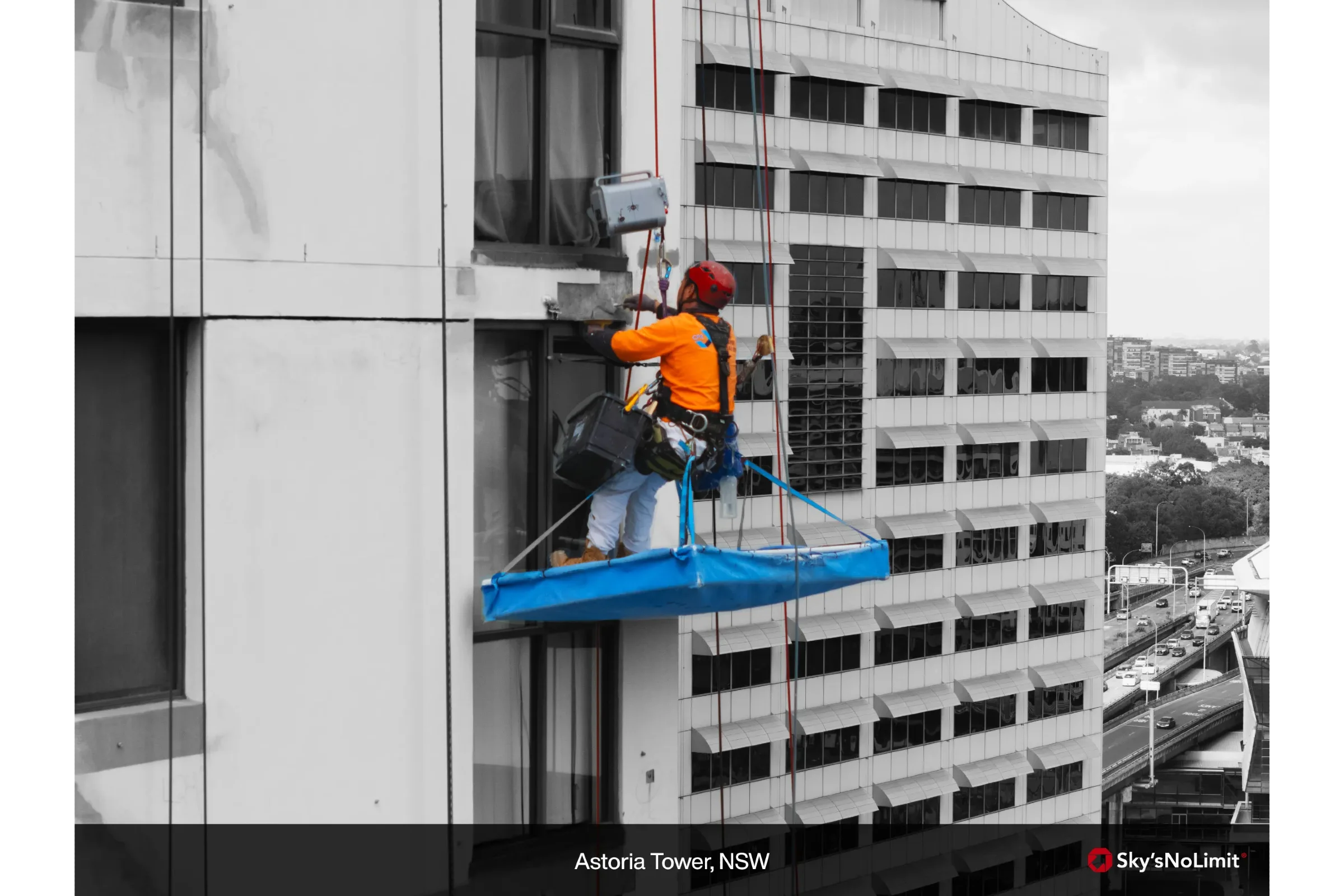
"Every building presents different access challenges. The earlier those challenges are identified, the easier it becomes to plan safer, more efficient maintenance without creating unnecessary disruption for occupants or project teams."
Access Planning Is About People as Much as Buildings
Maintenance projects rarely affect just the people carrying out the work. Building owners want to protect the long-term value of their asset. Facilities managers are responsible for keeping the property operating safely. Tenants expect minimal disruption, while contractors need safe, reliable access to complete the work efficiently. A well-planned access strategy helps balance those competing priorities. For example, scheduling works outside peak operating hours might reduce disruption for occupants, while selecting an access method that requires less ground space can help keep entrances, delivery areas or public pathways open. Small planning decisions like these often make a noticeable difference once work begins. This is why access planning works best as a collaborative process. Bringing together building owners, facilities managers, consultants and specialist access providers early gives everyone a clearer understanding of the project's requirements before work starts on site.
Learning from Every Maintenance Project
Commercial building maintenance isn't a one-off event. Most buildings require ongoing inspections, repairs and upgrades throughout their lifespan. By documenting site constraints, reviewing what worked well and identifying recurring access challenges, building owners and facilities managers can make future maintenance programs easier to plan. Over time, this leads to fewer unexpected issues, better-informed decisions and more predictable maintenance programs. Every maintenance project is an opportunity to make the next one better.
Access Planning Is an Investment in Long-Term Building Performance
Commercial building maintenance isn't just about responding to today's repairs. It also plays an important role in meeting building compliance requirements throughout the asset's lifecycle. It's about making decisions that help buildings remain safe, functional and easier to maintain over time. When access planning is considered early, maintenance becomes easier to coordinate, disruptions are reduced and future projects can often be planned with greater confidence. That's good for building owners, facilities managers, contractors and the people who use the building every day. Like any long-term asset strategy, small decisions made early often have the biggest impact later.
Better Maintenance Starts with Better Planning
The success of a maintenance project isn't measured only by the quality of the repair. It's also reflected in how safely the work is completed, how well the project is coordinated and how little disruption it causes along the way. Access planning is critical in attaining those outcomes. When it's considered early, project teams have more flexibility to address site constraints, coordinate stakeholders and choose an approach that suits both the building and the work being undertaken. For organisations responsible for commercial building maintenance, taking the time to plan access isn't simply another step in the process. It's part of making better decisions that support safer projects, smoother maintenance programs and stronger long-term asset performance. If you’re planning maintenance works on a commercial property, the team at Sky’s No Limit can help you assess your project’s access requirements and identify a practical, safe approach that is tailored to the building’s unique conditions.
FAQ
- What is access planning in commercial building maintenance?
- Access planning is the process of identifying how workers will safely reach the areas that need repair, inspection or maintenance on a commercial building. It considers the building's height, geometry, ground conditions, occupancy patterns and surrounding environment, and matches those to a practical, safe access method such as scaffolding, elevated work platforms, rope access or powered ascenders.
- When should access planning be considered in a maintenance project?
- As early as possible, ideally alongside the initial scope and budget discussions. Bringing access into the conversation from the start reduces the risk of unexpected delays, avoids reworking maintenance schedules to fit a chosen access method, and gives building owners, facilities managers and contractors more options to complete the work safely and efficiently.
- What factors influence access planning for commercial buildings?
- Building height and geometry, the type of work being undertaken, whether the building will remain occupied during the project, available ground space, surrounding pedestrian and vehicle traffic, weather exposure, and the frequency of return visits expected across the asset's life. Each factor changes which access approach best suits the project.
- Who should be involved in access planning?
- Access planning works best as a collaboration between the building owner, the facilities or asset manager, the maintenance contractor, and where relevant, a specialist access provider. Bringing everyone into the discussion early ensures the site constraints, project scope and access method are all aligned before work begins on site.
- How does access planning affect building occupants?
- A well-considered access strategy protects occupants from unnecessary disruption. Choosing an access method that requires less ground space keeps entrances, loading zones and public pathways open. Scheduling works around peak operating hours reduces impact on tenants. Selecting equipment that avoids full-façade encapsulation preserves natural light, balcony access and building visibility during the works.
- Can the same access method be used across different maintenance projects on the same building?
- Sometimes yes, sometimes no. A building that suits scaffolding for a full-façade renewal may not justify it for a routine inspection. Similarly, a rope-based system used for a targeted repair may not be the most efficient for large-scale glazing replacement. The access approach should be reviewed for each project based on the scope, timing and building conditions at the time.
- How does good access planning support long-term building performance?
- When access is planned properly, maintenance projects are safer, more efficient and less disruptive. Over the life of a building, this translates to fewer unexpected costs, better documentation of the building's condition, easier scheduling of future maintenance, and stronger long-term asset value. Small planning decisions made early often shape how the entire maintenance strategy plays out over decades.