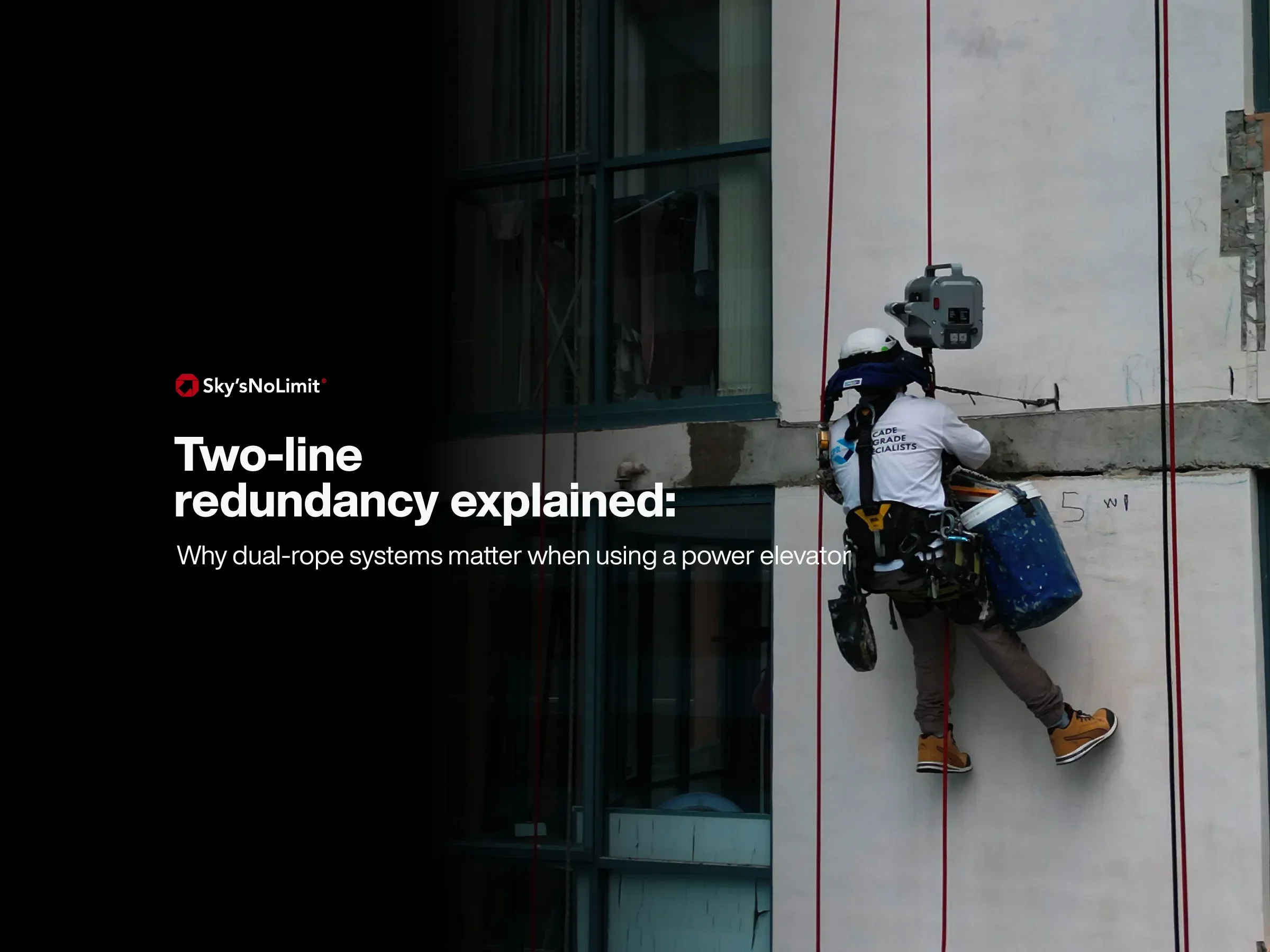
Two-line redundancy explained: why dual-rope systems matter when using a power elevator
Learn what two-line redundancy means in rope-based access, why dual-rope systems matter, and how they apply when using powered ascenders.
Read ArticleExplore SNL articles, updates and technical explainers designed to help contractors, consultants and asset owners better understand powered access systems.
Learn what two-line redundancy means in rope-based access, why dual-rope systems matter, and how they apply when using powered ascenders.
Read ArticleFind insights by application, project challenge, safety consideration or product category.
Learn what two-line redundancy means in rope-based access, why dual-rope systems matter, and how they apply when using powered ascenders.
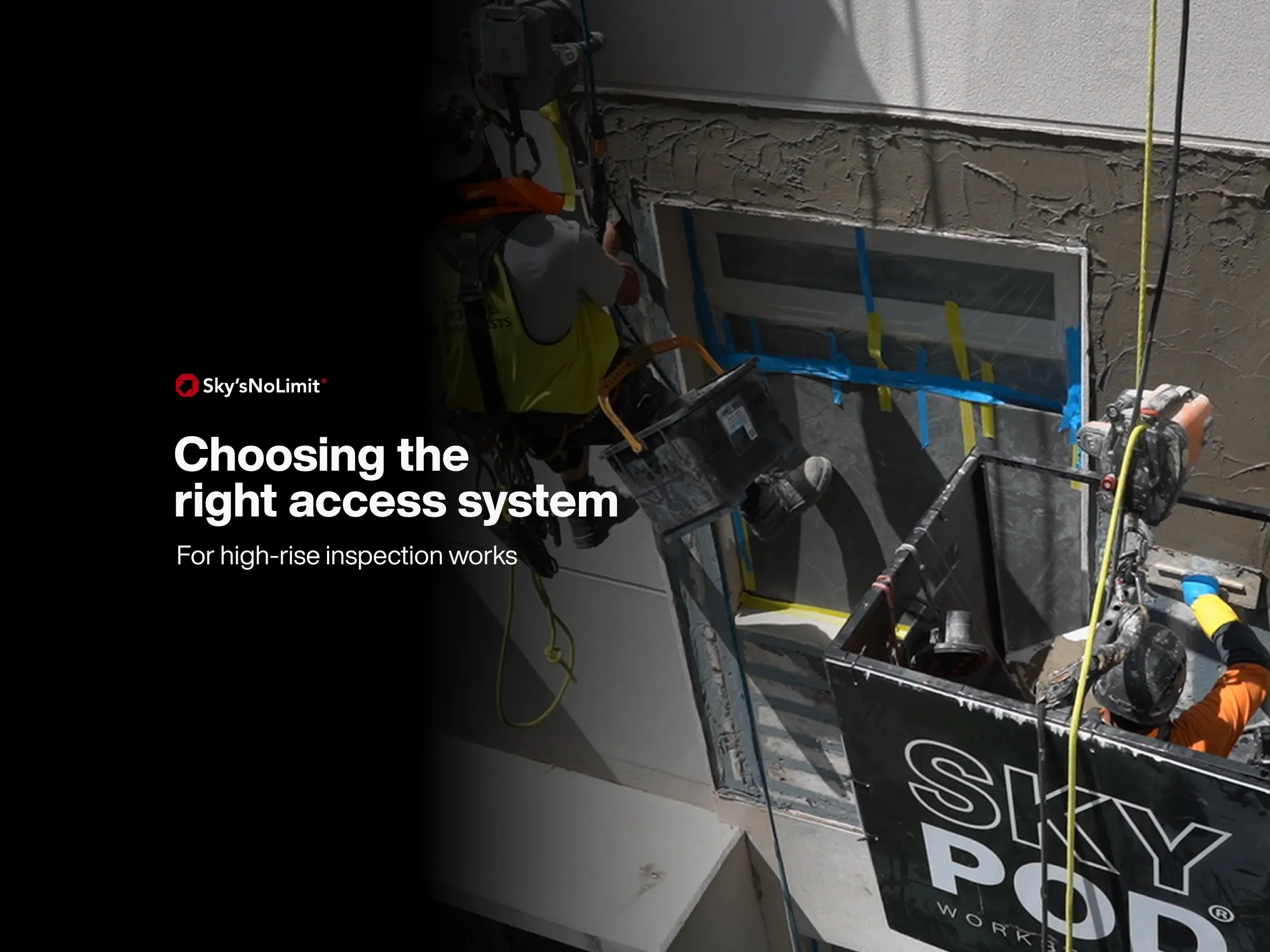
Choosing the right access system for high-rise façade inspection depends on height, scope, access points, disruption, weather exposure and inspection duration. Learn when PEARS® powered elevation is the best fit.
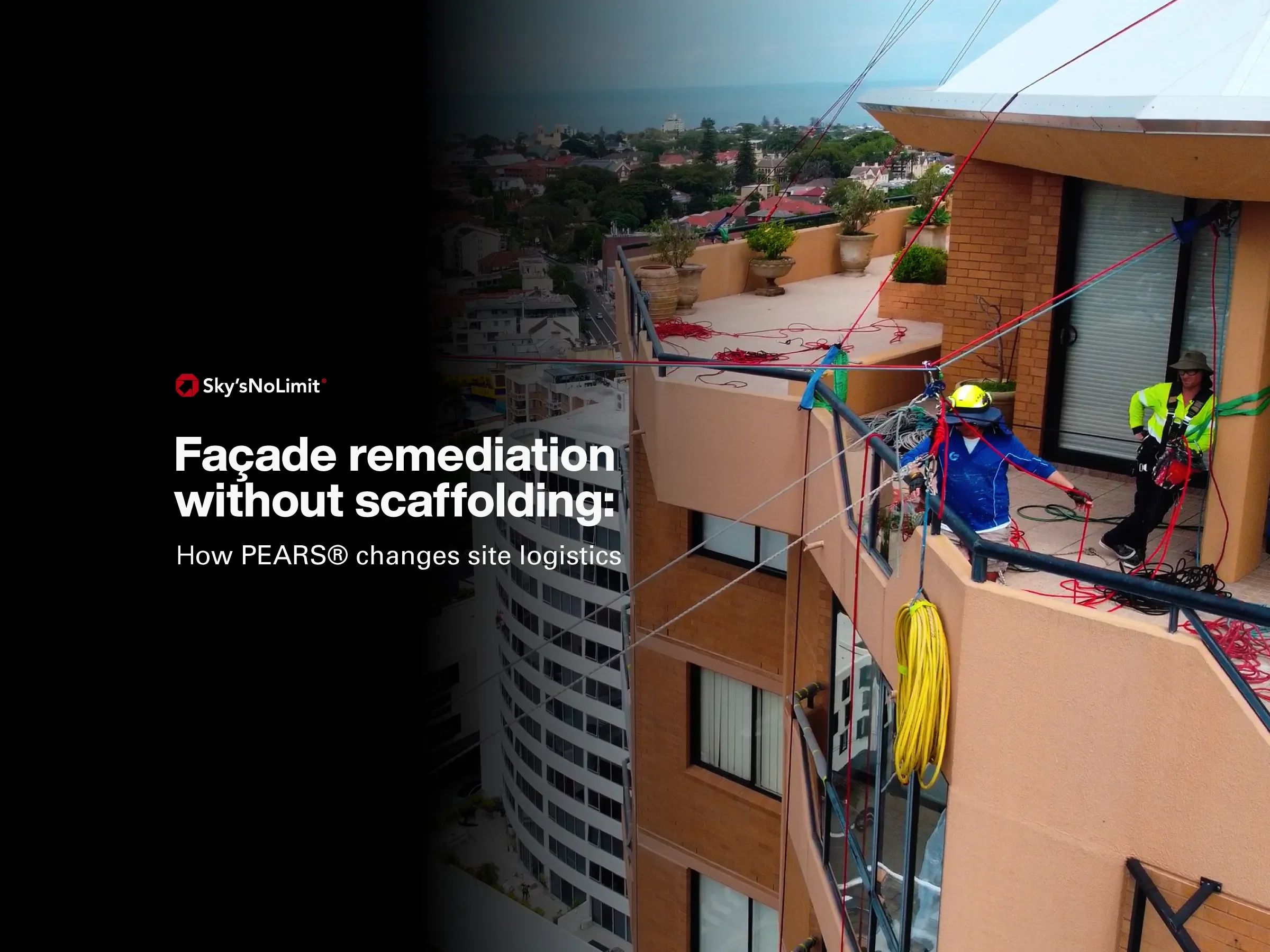
Learn how PEARS® powered elevation changes high-rise façade remediation logistics by reducing scaffold setup, cost, disruption and programme duration.
Learn how rope access in Australia is governed by AS/NZS ISO 22846, WHS legislation and project-level documentation, and where PEARS® powered systems fit.
Learn what PEARS® means, how the powered elevation methodology works, and how it combines equipment, safety, training and real-world façade access.
Learn why operator fatigue matters in rope-based access, how manual ascent affects safety and productivity, and how powered elevation reduces strain at height.
Speak with SNL about product suitability, site applications, training pathways, servicing and partner opportunities.