
What scaffold-based logistics actually look like
A standard high-rise façade remediation with scaffold runs through a predictable sequence. Site possession is taken. The scaffold is engineer-designed against the building geometry, ground conditions and expected loads. Ground-level setup occurs, including perimeter hoarding, pedestrian protection structures and material laydown areas. Where the works affect footpath access, council and traffic management permits are arranged. Several weeks of progressive scaffold erection follow, working upward from ground level with engineering inspections at each lift. Once the scaffold is up, the actual trade work begins. At project end, the sequence reverses for dismantle. The result is a building that is encapsulated for the full duration of the programme. Apartments lose natural light. Balconies become unusable. Ground floor businesses lose visibility. Building residents live through months of changed access patterns. Scaffold-driven programmes for full façade works on a 20 storey tower commonly run 6 to 12 months in total when setup and dismantle are included, and scaffold typically represents around 30% of total project cost.
What PEARS® powered elevation logistics look like
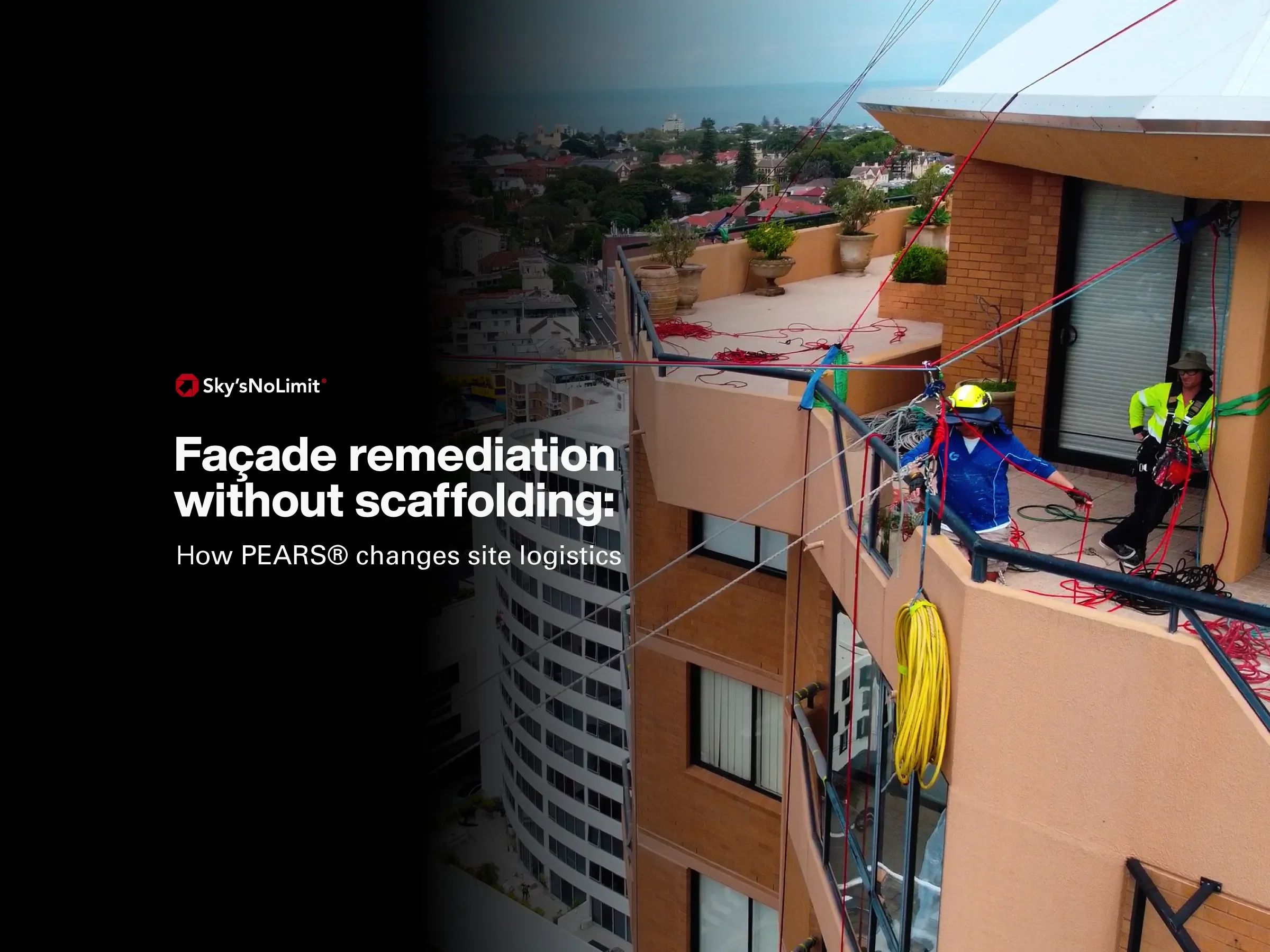
A PEARS® setup starts at the roof. Competent PEARS technicians install or verify anchor points, then rig 11mm EN1891 Type A static ropes down each work line. The MODE Smart Spider powered ascender system is attached and brought online. Anchors are permanent and continue for the life of the building with annual inspection and certification. Setup is completed within a single shift. The trade work begins immediately afterwards. There is no full-façade obstruction. Work lines are localised, moving across the façade laterally and vertically as the programme progresses. Ground-level footprint is a small staging area for batteries, tools, materials and supplies. The Meriton Towers Parramatta case study demonstrates the model at scale: a 60 storey ultra high-rise inspection scope completed in 3 weeks with 2 operators, no scaffold installed. The Astoria project shows the heavy-duty side: 12 tonnes of render removed and 12 tonnes reinstalled, all delivered through PEARS® powered elevation with the SkyPod® workstation.
Programme duration: ordinarily 20 to 30% quicker
Scaffold-free remediation through PEARS® is ordinarily 20 to 30% quicker than the scaffold equivalent on the same scope. The main reason is the elimination of scaffold erection and dismantle windows, which add multiple weeks at each end of the programme on a high-rise. The secondary reason is that operator productivity at the work face is higher with powered elevation: the technician arrives at each work point with full physical reserves and focuses on the trade rather than the climb. On inspection and targeted remediation, scaffold installation alone often runs longer than the entire active inspection would need with PEARS® powered elevation. Even on full façade renewal involving sustained continuous work, PEARS® remains the faster method. CPR Group has not encountered a façade scope in over 400 projects where scaffold delivered a shorter programme than PEARS®.
Cost: scaffold-free is ordinarily 20 to 30% less costly
Scaffold typically represents around 30% of total project cost on high-rise façade remediation. PEARS® scaffold-free access is ordinarily 20 to 30% less costly than scaffold on the same scope. There is no design and certification fee for a scaffold structure, no weekly hire on a standing structure, no dismantle labour and permit cost, and no extended building protection works for months on end. PEARS® also supports long-term Asset Care and Maintenance arrangements that scaffold cannot. Anchor points remain in place for the life of the building, so future inspection, maintenance or remediation work can be deployed quickly without rebuilding access infrastructure from scratch. Across a building's asset life, the cumulative cost difference is significant.
Heavy work and material handling without scaffold
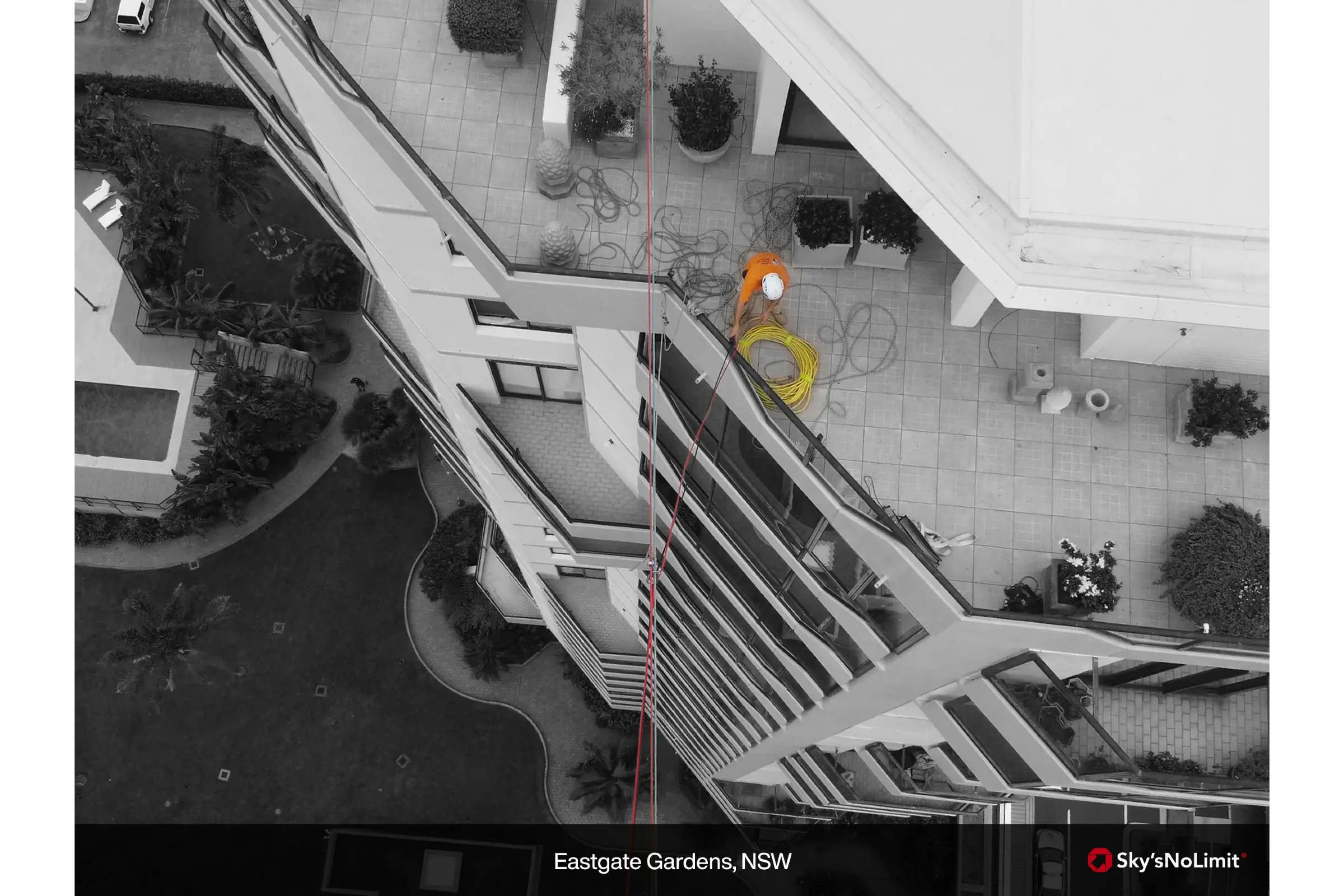
A common assumption is that scaffold-free access is limited to light or inspection work. CPR Group's project history shows otherwise. The Astoria project removed 12 tonnes of render and reinstalled 12 tonnes through the PEARS® framework. A Blacktown property required over 5 tonnes of rubble to be removed using jackhammers, again entirely through rope-based access. Material handling is integrated into the powered elevator setup: a technician at ground level can use a handheld remote to haul materials up the building, with davit arms, anchored pulley arrangements and multiple ascenders in parallel for higher lifting capacity. The MARS (Multiple Access Rope System) supports 6 to 8 façade technicians working simultaneously on a single elevation. The SkyPod® workstation provides an encapsulated working platform that can include dust suction and full debris encapsulation. Heavy duty work is not the limit of scaffold-free access, it is one of its strengths.
Occupant disruption and amenity
Building owners, residents and facility managers usually identify resident impact as one of the top three concerns on any façade programme, alongside cost and quality. PEARS® preserves natural light to apartments, keeps balconies available for most of the programme, concentrates noise and visual disruption to the specific work line at any moment rather than the entire elevation, and avoids the prolonged hoarding and pedestrian protection works that scaffold requires. Lifts, lobby access, mail and parcel deliveries, ground-floor retail and pedestrian movement around the building all continue largely undisturbed. Building security profiles are also preserved more easily, because there is no scaffold ladder pattern providing potential access points across the elevation. These amenity benefits are difficult to capture in a direct cost comparison but are often decisive at the owners' meeting level.
Frequently asked questions
- Can all façade remediation work be done without scaffolding?
- Yes. Across more than 400 façade projects, CPR Group has delivered inspection, targeted remediation, full façade renewal, heavy material handling, concrete repair and coating work through PEARS® powered elevation without scaffold. The Astoria and Blacktown projects are direct examples of heavy-duty work completed scaffold-free.
- Does scaffold-free access affect safety?
- Yes, positively. PEARS® powered elevation operates under AS/NZS ISO 22846 with two-line redundancy and integrated emergency functions. Industry safety data from Safe Work Australia supports rope-based access as one of the safer working-at-height categories under modern frameworks. The PEARS® approach also removes specific scaffold-related risks such as falls during erection and dismantle and dropped material from platforms.
- How much disruption does scaffold-free remediation cause to residents?
- Significantly less than scaffold-based works. Natural light, balcony use, ground-floor retail visibility and building access patterns are largely preserved through the programme.
- How long does scaffold-free façade remediation take?
- Scaffold-free remediation through PEARS® is ordinarily 20 to 30% quicker than the scaffold equivalent on the same scope. On inspection and targeted remediation, the difference is far greater because there is no multi-week scaffold erection and dismantle period.
- Is scaffold-free remediation more expensive than scaffold?
- No. It is cheaper, ordinarily 20 to 30% less costly than scaffold on the same scope. It is also less disruptive, faster to deploy, and supports long-term Asset Care and Maintenance arrangements that scaffold cannot.
When the PEARS® scaffold-free framework is used in conjunction with the SkyPod® workstation, the combined platform supports complete consultancy, inspection, remediation and maintenance for any building façade. It is ordinarily 20 to 30% less costly than scaffold, 20 to 30% quicker to deliver, safer to operate, and far less disruptive to occupants. To request a project assessment from the SNL team, get in touch for a comparative scope review.