
Setup time: weeks versus a single shift
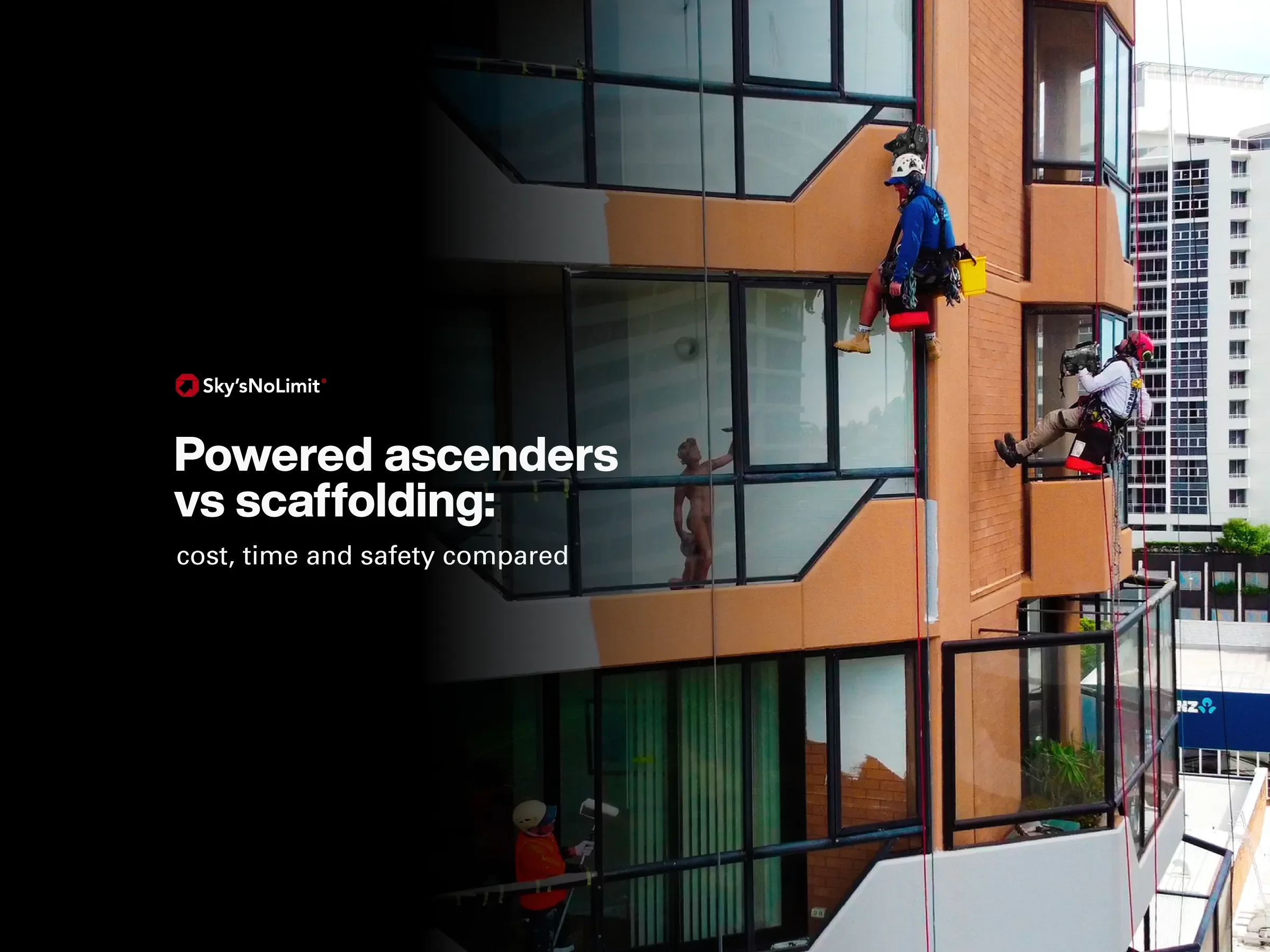
Scaffold erection on high-rise buildings is a multi-week activity by design. The structure has to be engineered, certified, progressively built from ground level upward, inspected at each lift, and tied back to the building at regular intervals. Industry estimates from Safe Work Australia and scaffolding contractors place erection of a full façade scaffold on a 20 storey tower at 2 to 6 weeks, depending on building geometry, ground access and crew size. Dismantling at project close adds a similar window. That is 4 to 12 weeks of access setup before and after any productive work is done. A powered ascender setup, operating within the PEARS® framework, is deployed within a single shift once anchorages are confirmed. Roof access is established, anchor points are verified or installed, 11mm static ropes are rigged down each work line, and the MODE Smart Spider powered ascender system is brought into operation. Trade work begins the same day. On the Meriton Towers Parramatta inspection, a 60 storey ultra high-rise scope was delivered in 3 weeks by 2 operators with no scaffold infrastructure. The setup time difference is the largest single driver of total programme duration on inspection, remediation and maintenance work.
Cost: scaffold represents around 30% of project cost
Industry practice in Australia commonly puts scaffold at around 30% of total project cost on high-rise façade remediation. That includes design and engineering certification, materials hire across the project duration, erection labour, weekly inspection charges, dismantle labour, and the permits and protection works around it. Of these, materials hire and project duration are the largest items, and they compound. A longer programme means more weeks of hire on the standing scaffold. PEARS® scaffold-free access is ordinarily 20 to 30% less costly than scaffold on the same scope. Cost is built up from operator labour, equipment cost amortised across the contractor's project portfolio, batteries and consumables, plus the standard PEARS® overheads of rigging, anchorage assessment and documentation. The cost profile is concentrated in labour and equipment, not in duration-linked items. Across more than 400 façade projects, CPR Group has not encountered a scope where this cost differential did not favour the PEARS® approach.
Safety: rope-based access is statistically safer than scaffold
Scaffolding and powered rope-based access both operate to documented standards. Scaffold is governed by AS/NZS 4576 and the Safe Work Australia, scaffolding code of practice, requiring engineer certification, regular inspections, fall protection and clear load limits. Powered ascender works operate under the modern Australian rope access standard AS/NZS ISO 22846, supported by a project-specific Safe Work Method Statement. The safety profile is not equivalent. Rope-based access systems hold the operator directly to permanent engineered anchorages on the building structure, with two independent ropes, two independent anchors, and a back-up fall arrest device. The operator is fully responsible for themselves and is required to be competent. Scaffold has minimal training requirements at the worker level (a white card and working at heights training are typically sufficient), and the structure itself depends on correct erection, weather conditions, and integrity of ties to the building. Industry safety data from Safe Work Australia, measured per 100,000 hours of work, consistently shows rope-based access within the safer access categories, while scaffold falls within the middle of the risk profile, above ladders but below modern rope-based systems. Powered ascenders within the PEARS® framework also remove specific risk events that scaffold cannot avoid: dropped material from scaffold platforms, falls during erection and dismantle, unexpected high wind loadings on the wrapped structure, and the prolonged exposure that comes with scaffold being in place for the full programme duration.
Site footprint and occupant disruption
Scaffold installation requires significant ground-level setup space, pedestrian protection structures, council permits in built-up environments, and often partial closure of adjoining footpaths or laneways. For occupied buildings, scaffold disrupts natural light to apartments, blocks balcony use entirely, and changes building access patterns for the full project duration. Ground-floor retail visibility is reduced, and depending on the scaffold wrap, building branding and signage is obscured for months. A powered ascender setup uses anchor points at the roof and a small ground-level zone for equipment staging, batteries, materials and tools. There is no continuous façade obstruction, no scaffold lighting required overnight, and no extended impact on building occupants or street-level retail. Natural light is preserved, balcony use is maintained for most of the programme, and pedestrian access continues largely as normal. On a residential strata building, this difference frequently surfaces as the most discussed concern at owners' meetings.
What about heavy or sustained work?
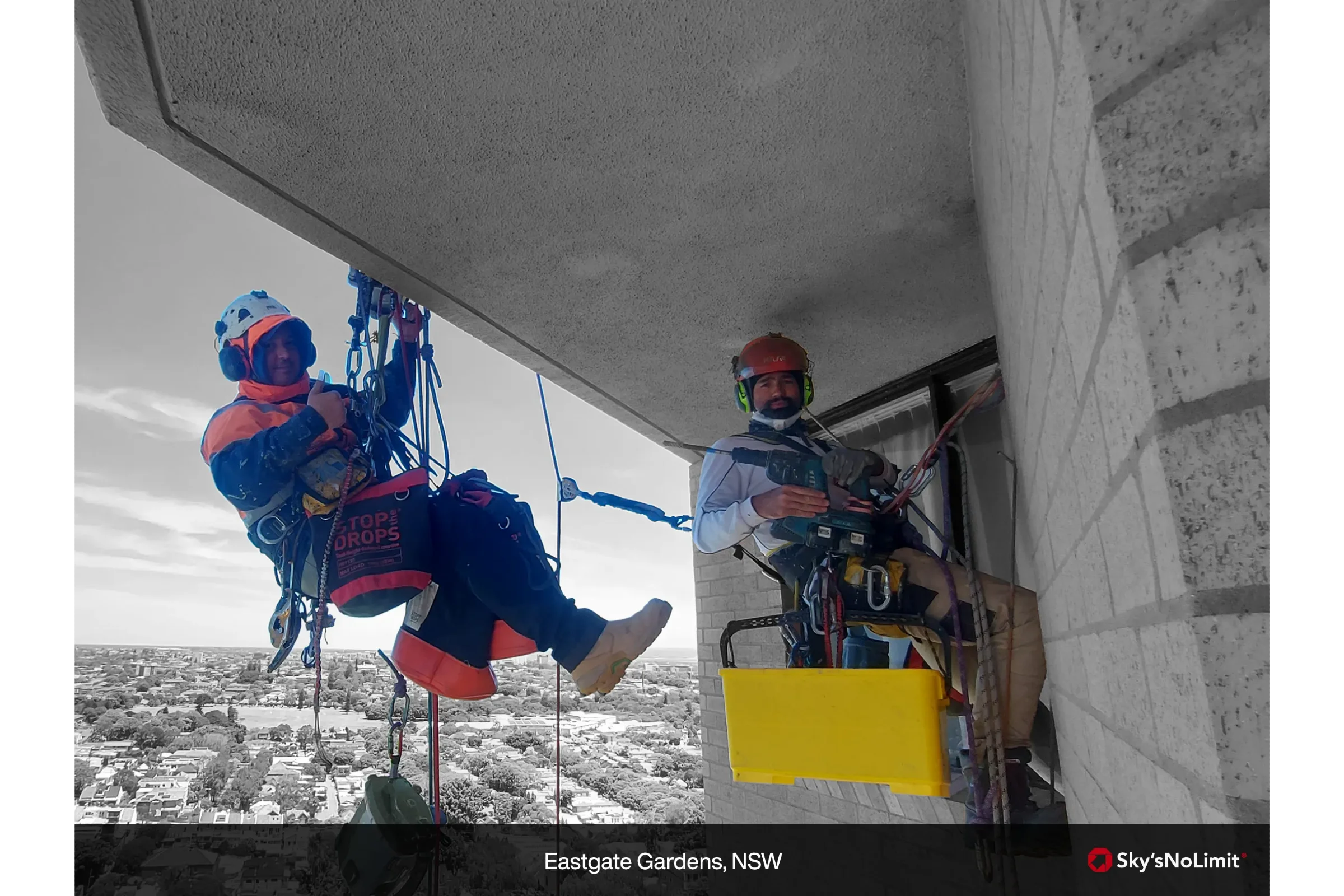
A common assumption is that powered ascenders are limited to light work, inspection or sealant repair. CPR Group's project history shows otherwise. The Astoria project involved 12 tonnes of render removed from the façade and 12 tonnes of new render reinstalled, all delivered through the PEARS® framework with no scaffold. A Blacktown property required over 5 tonnes of rubble removal using jackhammers, again completed safely through rope-based access. The PEARS® framework supports davit arms, anchored pulley arrangements, multiple ascenders in parallel for higher lifting capacity, and the MARS (Multiple Access Rope System) for 6 to 8 façade technicians working simultaneously on a single elevation. Heavy work is one of the strengths of the PEARS® framework, not its limit.
Frequently asked questions
- How long does it take to set up a powered ascender system?
- Setup is typically completed within a single shift once anchorage points are confirmed. This compares to multiple weeks for full façade scaffolding on a high-rise building.
- Are powered ascenders cheaper than scaffolding?
- Yes. Scaffold typically represents around 30% of total project cost on high-rise façade remediation. PEARS® scaffold-free access is ordinarily 20 to 30% less costly than the equivalent scaffold scope, while delivering the project faster and with less occupant disruption.
- Are powered ascenders safe for high-rise work?
- Yes, and rope-based powered access is statistically safer than scaffold. The PEARS® framework operates under AS/NZS ISO 22846, with two-line redundancy, integrated emergency descent and controlled braking. Safe Work Australia data places rope-based access among the safer working-at-height methods when applied under modern frameworks.
- Can powered ascenders handle heavy materials and sustained work?
- Yes. CPR Group projects such as Astoria (12 tonnes of render removed and 12 tonnes reinstalled) and Blacktown (over 5 tonnes of rubble removed by jackhammer) demonstrate heavy-duty work delivered through the PEARS® framework without scaffold. Multiple ascenders in parallel and the MARS system support up to 6 to 8 façade technicians working simultaneously on one elevation.
- What types of projects suit powered ascenders best?
- Façade remediation, inspection, glazing replacement, painting and coating, sealant work, wind turbine maintenance and infrastructure access on bridges and towers. The PEARS® framework is appropriate for any vertical scope where rope can be safely rigged from above, which is the large majority of high-rise façade work.
When the PEARS® scaffold-free access framework is used in conjunction with the Sky POD workstation, the combined platform supports complete consultancy, inspection, remediation and maintenance for any building façade. It is ordinarily 20 to 30% less costly than scaffold, faster to deploy, safer to operate, and far less disruptive to occupants. The choice is not between equivalent options. To speak to the SNL team about a specific project, get in touch for a comparative scope review.