
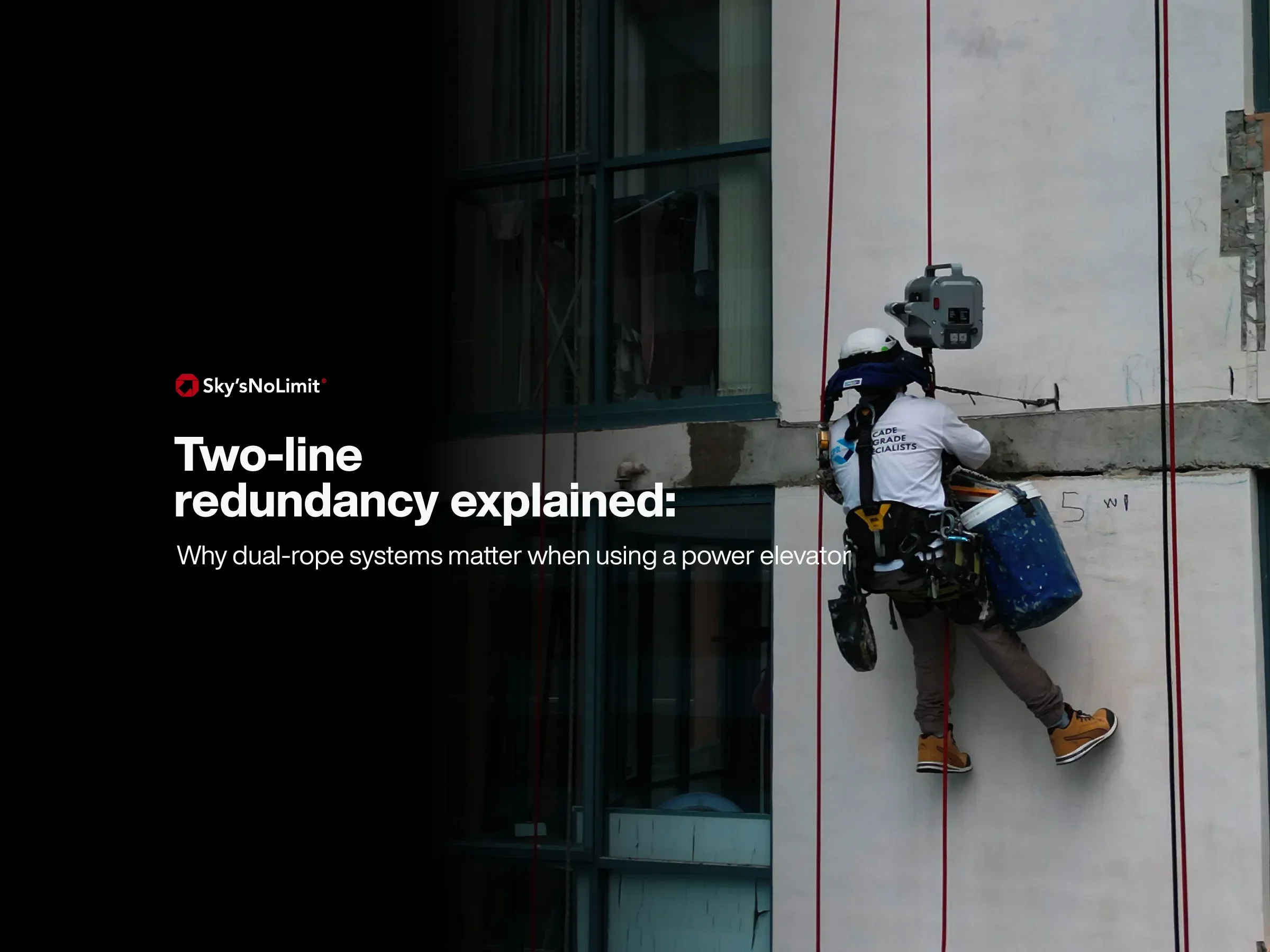
What is two-line redundancy?
Two-line redundancy means an operator is always supported by two ropes, each rigged to an independent anchor point. The working line carries the primary load through whatever device the operator is using to ascend, descend or position. The safety line carries no load under normal operation, but is connected to the operator through a back-up fall arrest device that will arrest a fall if the working line, its connections, or its devices fail. The principle is reflected in AS/NZS ISO 22846, the current Australian Standard for rope access systems, which superseded AS/NZS 4488. It is the single most important difference between rope-based access and recreational or single-rope techniques used in other contexts. It exists because rope-based access operates at heights where a single point of failure would have catastrophic consequences.
The working line
The working line is typically rigged from a primary anchor with a descender, an ascender, or a powered ascender attached to the operator's harness. It carries operator weight, tool weight, material load if integrated, and any dynamic loading from movement, swing or impact. The line specification matters: rope-based access in Australia uses 11mm static rope to EN 1891 rope specification Type A, sized to handle these combined loads with significant safety margin. Anchorages for the working line are selected to take the expected loads plus dynamic factors. Permanent engineered anchorages designed into the building structure are preferred where available. Where not, temporary engineered anchorages are installed as part of project setup, with documentation confirming their suitability for the loads they will carry. CPR Group commonly installs permanent anchorages on Australian buildings that continue to serve for the life of the asset, supporting annual inspection and certification under a building maintenance regime. Pre-use checks on the working line cover rope condition along the full working length, end terminations, anchor connection integrity and the operating device itself. These checks are documented and signed off before any operator places weight on the line.
The safety line
The safety line is rigged from a separate anchor, ideally on a different structural element, with its own back-up fall arrest device on the operator. The back-up device travels along the safety line during normal movement and locks automatically if a sudden movement, acceleration or fall occurs. The two anchors and two ropes are independent failure paths, meaning a single point of failure cannot drop the operator. The back-up device itself is a specific category of equipment, not interchangeable with general-purpose ascenders. It is designed to remain in standby mode under normal smooth movement and to engage rapidly when a fall is detected. Different back-up devices have different characteristics suited to different work types, and selection is part of the rigging plan for each project.
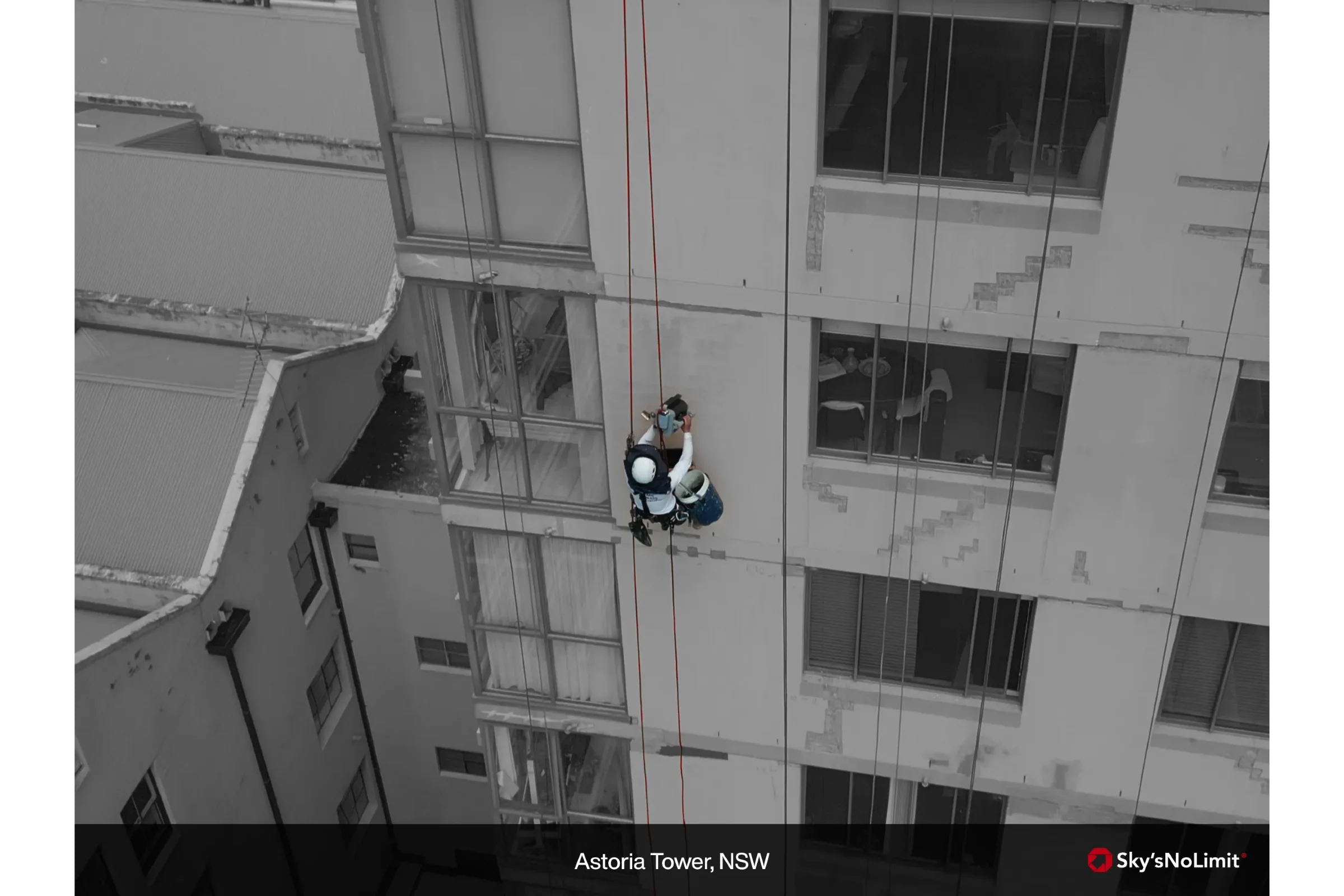
How redundancy works with powered ascenders
When a powered ascender replaces manual climbing on the working line, the two-line architecture stays exactly the same. The MODE Smart Spider powered ascender system attaches to the working line as the lifting device, in place of mechanical hand and foot ascenders. The safety line and back-up device on the operator remain unchanged. If the powered ascender, the working line or its anchor fail, the safety line catches the operator through the back-up device. If the operator loses motor power on the powered ascender, the integrated automated emergency descent function lowers them under controlled braking. If even the emergency descent fails, the safety line remains as the final backup. The redundancy holds at multiple layers, and each layer is independent of the others. This layered architecture is part of why the MODE Smart Spider is considered a controlled system rather than just a motorised device. The safety functions are integrated into the equipment, and the two-line framework continues to operate around it.
Standards that require redundancy
Two-line redundancy is required by AS/NZS ISO 22846 for rope-based access operations in Australia. Where projects specify alternative single-line techniques, those are typically constrained to specific work types and require additional risk controls beyond the standard rope access framework. For powered ascender works on high-rise façades, two-line redundancy is the default and expected configuration, and is reflected in every Safe Work Method Statement Sky's No Limit operates under. The safety and compliance framework on the SNL site documents this in the context of MODE Smart Spider deployments.
Common rigging configurations
On a typical façade access deployment, both ropes are rigged from anchorages at the roof level, with the working line and safety line offset laterally so they hang independently down the façade. The operator descends or ascends the working line under powered control, while the back-up device on the safety line tracks the same vertical movement at a slight offset. For more complex geometries, such as ledges, recesses or non-vertical façade features, additional rigging considerations apply. The principle remains the same: two independent ropes, two independent anchors, with the back-up device always able to engage on the safety line if the working line system fails.
Common misconceptions
Two common misconceptions are worth correcting. First, a powered ascender does not remove the need for the safety line. The motor and its braking system are part of the working line setup, not a substitute for redundancy. Operators sometimes encounter this assumption from clients new to powered rope-based access, and it should be corrected directly. Second, two ropes from the same anchor point are not redundancy. The principle requires two independent ropes on two independent anchors. Two ropes sharing a common anchor share a common failure point: if the anchor fails, both ropes drop. Operators trained under the PEARS® framework are familiar with these distinctions, and compliance teams reviewing rope access contractors should confirm the same understanding is reflected in submitted Safe Work Method Statements.
Frequently asked questions
- What is two-line redundancy in rope access?
- Two-line redundancy means an operator is supported by two independent ropes on two independent anchors at all times. One rope is the working line, the other is the safety line with a back-up fall arrest device.
- Does using a powered ascender change the two-line requirement?
- No. The powered ascender replaces the manual climbing device on the working line. The safety line and back-up device remain a mandatory part of the system.
- What if the powered ascender loses power mid-ascent?
- The MODE Smart Spider has an integrated automated emergency descent function that lowers the operator under controlled braking. The safety line provides additional independent fall arrest protection.
- Are two anchors required, or one anchor with two ropes?
- Two independent anchors are required, ideally on different structural elements. Two ropes from a single anchor share a common failure point and do not meet the redundancy principle.
- What standards mandate two-line redundancy?
- AS/NZS ISO 22846 requires two-line redundancy for rope-based access. Single-line techniques are restricted to specific work categories with additional controls.
Two-line redundancy is non-negotiable in rope-based access, and powered ascenders are deployed within it, not around it. To discuss specific rigging configurations or compliance documentation, speak to the SNL technical team.